
What is Quantum Computing, and Why Should Creatives Care?

What is Quantum Computing, and Why Should Creatives Care?

Quantum computing –  it’s mind-bending, bordering on philosophical, and yet, it’s not science fiction. This field holds the potential to reshape not just science and technology, but how we express ourselves creatively. What can we build with it?
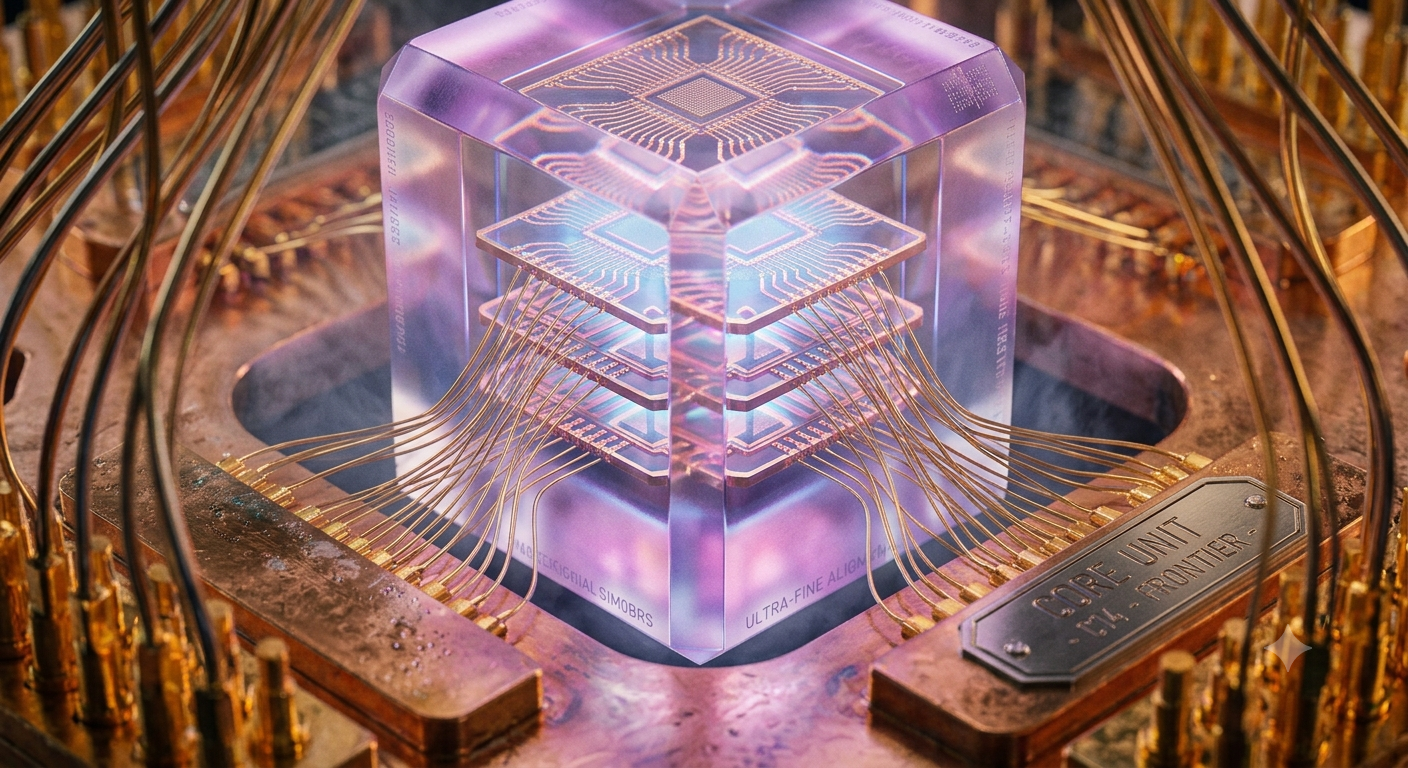
 

Quantum computing sounds like science fiction. In many ways, it still is. The technology is in its early days and today’s quantum computers can only solve a limited number of problems. Even so, many researchers believe they could eventually tackle problems that are out of reach for even the most powerful supercomputers. For creatives, that raises an interesting question. What happens when we get access to an entirely new way of computing?


A Different Way of Computing

The computers we use today store information as bits. A bit is either a 0 or a 1, much like a light switch that is either on or off.

Quantum computers use qubits instead. Unlike ordinary bits, qubits can exist in a quantum state that combines both 0 and 1 until they are measured. They can also become linked through a phenomenon called entanglement, allowing certain quantum algorithms to solve problems in ways that classical computers cannot.

That doesn’t mean quantum computers are simply faster computers. In fact, they are slower than ordinary computers for most everyday tasks. Their advantage lies in solving specific kinds of problems involving things like optimization, simulation and cryptography.


What Could This Mean for Creative Work?

No one knows exactly how quantum computing will influence creative work. Most ideas are still speculative, just as many ideas about AI were a decade ago. But there are already some interesting directions.

Creative work often involves exploring thousands or even millions of possibilities. Whether you’re generating images, composing music or designing products, much of the process comes down to searching for interesting combinations. Quantum algorithms may eventually help explore these creative spaces in new ways, making it possible to discover solutions that would be difficult or impractical to find using classical computers.

Some companies are already experimenting with these ideas. MOTH, for example, is developing creative tools that use quantum computing for music generation and audio processing. The technology is still in its early stages, but projects like these offer a glimpse of how quantum computing could become another tool in the creative process.

Another area where quantum computing could have an impact is simulation. One of its greatest strengths is modelling complex physical systems. That research is mainly focused on chemistry, physics and materials science today, but better simulations could eventually influence architecture, product design, visual effects and other creative disciplines where physical realism matters. Researchers are also exploring how quantum computing and AI might work together. The field is still young, and many questions remain unanswered, but future creative tools may combine both technologies rather than choosing one over the other.


A Different Way to Think

Perhaps the biggest opportunity isn’t technical. Quantum computing introduces ideas that feel very different from the binary logic we’ve built most digital tools around. Probability, uncertainty and multiple possible outcomes become part of the process rather than something to eliminate. Some artists are already exploring these concepts in their work. Not because they need a quantum computer, but because the ideas behind quantum physics offer a different way of thinking about creativity itself.


Looking Ahead

Quantum computing won’t replace the computers on our desks anytime soon. Most experts expect practical applications to arrive gradually, beginning in fields such as chemistry, logistics and materials science before reaching broader industries.

It’s impossible to know exactly where the biggest creative breakthroughs will come from. But every major technological shift has expanded the creative toolbox. Photography, computers and AI have all changed how ideas are made. Quantum computing may eventually do the same, not by replacing human creativity, but by giving us new ways to explore it.