
How to Use Chat GPT for Fashion
A chatbot that can not only hold a full conversation but also answer your questions about pretty much any topic. Chat GPT by Open AI is now out in the wild. And it’s pretty impressive. How can we apply this technology in the world of fashion?
What is Chat GPT?
The language processing model known as GPT, or Generative Pretrained Transformer, was created by OpenAI. It is a “transformer” model, which means that it processes input text and produces output text via self-attentional mechanisms. GPT models can produce high-quality text that is comparable to human-written language since they have been “pretrained” on a lot of text data.
GPT models can produce real-time replies to user messages in the context of AI conversation. These responses can be tailored to the user and the context of the chat, enabling more engaging and natural conversations. In order to give consumers responses that are human-like, GPT models are frequently utilized in chatbots and other conversational AI systems.
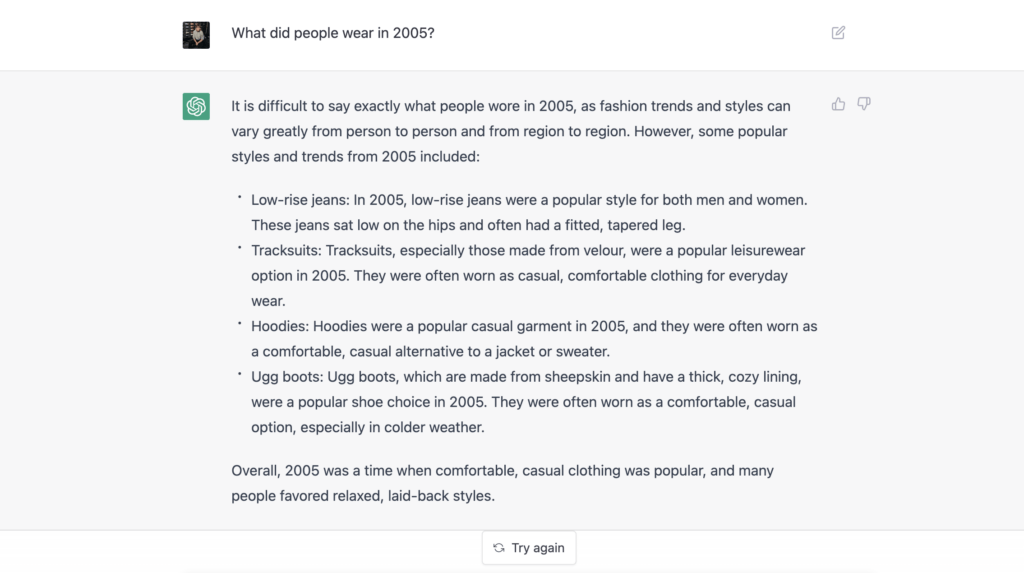
testing AI chat by Open AI
How can it be used in fashion?
ChatGPT and other language models have plenty of potential applications for fashion brands. Some are relatively simple, while others could change how customers interact with brands altogether.
Personalized product recommendations
One of the more interesting applications is product discovery. Instead of navigating endless categories and filters, customers could simply describe what they are looking for.
A shopping assistant could combine that request with information about the customer’s preferences, previous purchases and the retailer’s catalogue to suggest relevant products. The interaction starts to feel less like searching a database and more like talking to someone who understands what you want. Eventually, your favorite fashion retailer could have an assistant that knows your style, preferred brands, sizes and previous purchases and helps you navigate new collections accordingly.
Writing product descriptions
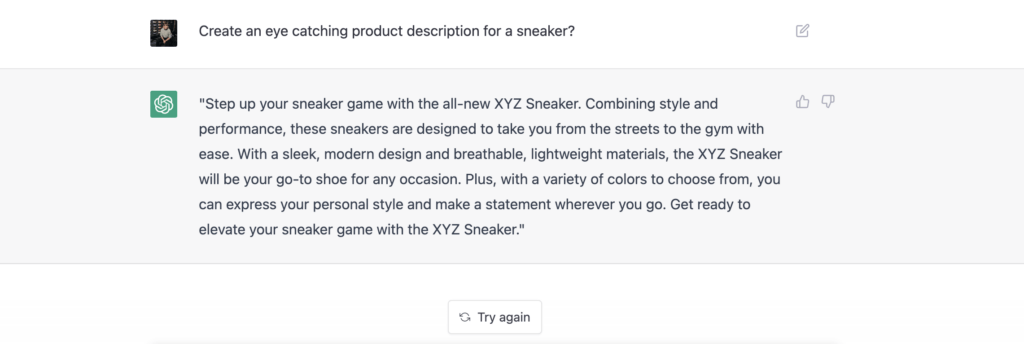
A much more immediate use case is product descriptions. Language models can turn structured product information into descriptions for ecommerce, marketplaces and other channels.For brands managing thousands of products, this could remove a significant amount of repetitive writing. The important part is giving the model accurate product data and clear rules for the brand’s tone of voice rather than simply asking it to invent a description from scratch.
Creating content for social media
Language models can also help brands develop social content, from first drafts and variations to adapting the same idea for different platforms, audiences and markets.
The quality depends heavily on context. A generic prompt will usually produce generic copy. Giving the model examples of how the brand communicates, together with clear guidelines and information about the campaign, can produce much more relevant results.
Human oversight is still important, particularly for public facing communication. The most useful role for these models may not be replacing the person creating the content, but making it much faster to explore, adapt and produce variations of it.
Providing customer support
Customer service is one of the most obvious applications for conversational AI. Instead of relying on a chatbot with a limited set of predefined answers, language models can understand questions expressed in many different ways and respond conversationally. For fashion retailers, an assistant could answer questions about availability, sizing, materials, deliveries, returns and product care at any time of day. But there is an important condition: it actually has to be useful. A confident but incorrect answer about whether a shoe is available or when an order will arrive is worse than a chatbot admitting that it doesn’t know.
The real opportunity comes when the language model is connected to reliable information about products, inventory, orders and company policies. At that point, conversational AI becomes less of a chatbot and more of an interface to the retailer itself.